
HOAs can better engage with homeowners by:
1. Building relationships long before election season
2. Communicating frequently through newsletters, social media, and even in-person events
3. Personalizing outreach
4. Streamlining the voting process
5. Celebrating participation
HOA elections fill much-needed board seats, but they do a lot more than that. Through elections, homeowners shape the direction of their community. Their votes directly affect everything from budgeting to rules and amenities, making HOA elections a must-have for any well-run community.
Voting keeps your HOA moving, but homeowner participation is a challenge for most associations. HOA elections typically have low turnout, leaving critical decisions in the hands of a small fraction of the community.
Regular email reminders can help nudge some homeowners to submit their ballots, but in reality, homeowner engagement starts long before election season. Learn why homeowner engagement is so crucial for your HOA, plus five practical ways to increase engagement.
Why Does Homeowner Engagement Matter for HOA Elections?
Many HOAs approach elections with wishful thinking: they assume that if they build it, members will come. Sure, some homeowners will show up when voting opens. But relying on passive participation alone often leads to the same outcomes: low turnout and difficulty reaching quorum.
The best HOAs have an intentional, year-round strategy that fosters closer relationships with homeowners – not a last-minute scramble before ballots go out. Investing in homeowner engagement helps your association:
Engage with more people
When participation is low, election results tend to reflect the preferences of a small subset of homeowners. Increasing engagement brings in more diverse perspectives, resulting in decisions that better represent your community.
Reach quorum
Struggling to hit quorum is rarely just an election-day problem; it’s usually the result of long-term disengagement. Trying to fix participation right before board elections is difficult and often ineffective. Communities that make consistent touchpoints throughout the year are far more likely to meet quorum without stress.
Ensure member satisfaction
Transparency and participation go hand in hand. When you prioritize active communication, you’ll see a lift in member satisfaction.
Homeowner engagement may not be easy to achieve, especially for larger HOAs, but it’s a great goal to pursue. It takes time to build trust, but engaging with homeowners builds the foundation for a healthier community.
5 Tips To Get Homeowners Excited About HOA Elections
Homeowners are busy. As a board member, you’re probably fixated on planning an election, but homeowners are focused more on the demands of their daily lives. You need proven strategies to break through the chaos of their busy schedules. Follow these tips to engage homeowners and run more successful HOA elections.
1. Engage Homeowners Long Before an Election
One of the biggest mistakes HOAs make is treating elections as a standalone event rather than as the culmination of year-round communication. Engagement should be part of how you communicate with members all year.
Start by regularly updating homeowners on board initiatives and outcomes. A monthly email newsletter is a great way to do this without overwhelming members’ inboxes. Share progress on projects, budget decisions, and policy changes so residents can see how board actions directly affect their day-to-day lives. When people understand what the board does – and why it matters – they’re far more likely to care about who serves on it.
2. Communicate Clearly and Frequently
Consistent communication is one of the biggest drivers for homeowner participation. Follow these tips to connect more with members:
Start Early
Election-specific outreach should begin at least 60 days before the nomination period opens. Early communication gives homeowners time to absorb information and ask questions, rather than reacting at the last minute.
Use Multiple Channels
No single communication method will reach everyone. Use a mix of social media, email, HOA portals, your website, and direct mail to reach more people.
Be Clear
Election update messages are helpful, but simply sharing dates with members won’t increase participation. Homeowners also need to know what each board member does, candidate qualifications, and how the board affects daily life. When homeowners understand the real-world impact of an election, voting will feel less abstract.
Face-to-face connections are also helpful, since emails and texts alone aren’t always enough to persuade people to vote. Add interactive touchpoints to build familiarity and trust. That might include pre-election socials and meet-and-greets, short Q&A sessions, or family-friendly events like trivia nights (with prizes!).
3. Personalize Outreach
Generic reminders can only go so far. Homeowners are far more likely to engage with personalized messages. Try humanizing your outreach efforts with:
Neighbor-to-neighbor outreach
Encourage board members or trusted volunteers to personally reach out to neighbors – especially those who haven’t voted in the past. A quick conversation can make elections feel less formal and more communal.
Segmentation
Not all homeowners need to hear the same message. With segmentation, you tailor your outreach based on each resident’s preferences or history. For example, you can send different email blasts to members based on whether they’re new or long-term residents.
Warm language
Automated emails don’t have to be impersonal. Short “Meet Your Board” notes or community spotlights embedded in election reminders help reinforce that real people, not policies, are behind the process. Platforms like SnapBallot™ support this kind of personalization by allowing boards to include custom messaging.
4. Streamline the Voting Process
Homeowners are much more likely to participate in an HOA election if it’s easy to do so. After all, even highly engaged members will drop off if the voting process is confusing or takes too much time.
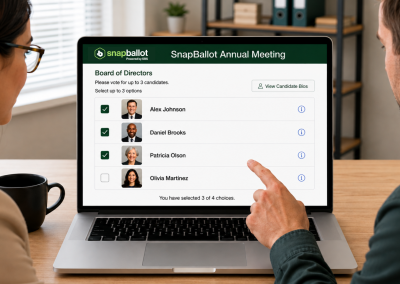
The best way to streamline the voting process is to embrace digital voting tools. These platforms remove common friction points while improving visibility and giving members more confidence in the process. You don’t need technical chops, either. SnapBallot is intuitive and user-friendly, so you can create an election in just minutes – no IT team required. Send members a secure single login link to submit their votes; SnapBallot tracks their choices while keeping everything completely anonymous.
Adding SnapBallot to the mix will simplify voting significantly, but voter education still matters. Don’t assume everyone “just knows” how to vote. Share a step-by-step voting guide and a short FAQ that answers common questions. Quick walkthrough videos can also help. The goal is to eliminate members’ confusion before they use it as a reason not to vote.
5. Celebrate Participation
Remember, homeowner engagement is a year-round activity. You shouldn’t go silent the moment an election is over. How you acknowledge members’ participation after an election will influence whether they get involved next time.
A simple thank-you goes a long way. Acknowledge everyone who voted, as well as those who stepped up to run as candidates. If your governing documents allow it, consider offering small incentives, like raffle entries, to homeowners who cast ballots or attend election-related meetings. These don’t need to be elaborate; even modest rewards can make participation feel appreciated and fun.
Finally, consider throwing a modest but fun post-election bash. A “Community Appreciation Day” closes the loop and reinforces the fact that your HOA is about community, not just compliance.
When More Homeowners Vote, Everyone Wins
Successful HOA elections don’t happen by accident. They’re the result of thoughtful outreach and an accessible voting process. Involving and appreciating homeowners throughout the year will strengthen their trust in the voting process and steadily improve engagement.
Fortunately, you don’t have to change everything at once. Small changes can have a big impact on voter turnout. Offering member-friendly voting options is one of the best ways to boost engagement and reduce friction.