Running an HOA election shouldn’t feel overwhelming. But unfortunately, many boards find themselves navigating a confusing maze of paperwork and low turnout.
The good news is that switching to an HOA electronic voting system can make a lot of these challenges a thing of the past. Of course, as communities go digital, board members naturally have questions about legality, security, homeowner adoption, and whether digital tools truly make elections easier.
This guide breaks down the most common questions HOAs ask when evaluating electronic voting systems. From compliance to accessibility to cost savings, you’ll get clear, practical answers designed to help your board make an informed decision.
Questions About the Benefits of Electronic Voting
Digitizing manual processes and paper voting can do a lot of good. The right system reduces administrative burden while increasing homeowner participation. But if you aren’t sure whether electronic voting would benefit your HOA, consider these frequently asked questions.
Can you use an HOA electronic voting system for more than voting?
Absolutely. You don’t subscribe to an electronic voting system just for voting features (although they’re a big perk).
Most HOA-approved online voting platforms can support a wide range of governance needs beyond annual board elections. In many communities, boards use these platforms for:
- Budget Approvals
- Bylaw Changes
- Special Assessments
- Quick polls that help guide decision-making between meetings
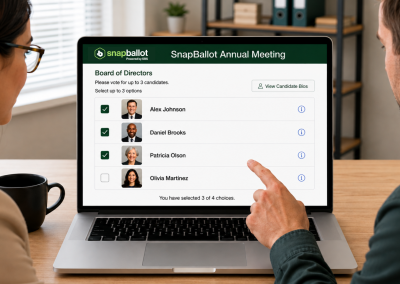
Tools like SnapBallot™ also let you upload documents, include candidate bios, apply weighted voting, or segment ballots by membership. This setup makes the platform a central hub for all important decisions, not just a once-a-year election tool.
What are the pros and cons of electronic voting for HOAs?
There’s a lot to love about electronic voting, including pros like:
Higher participation: Homeowners can vote from any device, at any time, which typically boosts turnout.
Less administrative work: There’s no need to print and mail ballots or conduct manual counts.
Better accuracy: Digital ballots reduce human error, prevent duplicate votes, and maintain consistent records.
More transparency: Built-in audit trails and real-time reporting help boards build trust with homeowners.
Accessibility: Online voting is great for communities with busy professionals or mobility-limited residents.
While electronic voting can be a huge win, it has some downsides, such as:
Learning curve for some members: A small subset of homeowners may prefer paper or need assistance with online voting.
Dependence on technology: Although online systems are stable, boards should still confirm that the platform offers secure hosting and support.
Perceived change: Some communities need time to adjust to moving away from traditional paper ballots.
There’s no such thing as a perfect voting solution (even traditional paper options have their downsides). What matters most is choosing a voting platform that mitigates any issues. For example, SnapBallot streamlines everything for you by offering clear instructions, easy access links, and mobile-friendly voting that even non-tech-savvy members can navigate.

Compliance and Legal Questions
Compliance is one of the biggest concerns HOAs face when considering a move to electronic voting, and rightly so. Each state has its own rules around online ballots. While compliance is ultimately on you, modern voting platforms make it much easier to stay within the legal lines. Below, we break down the most common compliance-related questions HOAs ask before going digital.
Is electronic voting legal for HOAs?
In many states, yes. Electronic voting is legal for HOAs as long as the community follows its governing documents and state statutes. Many states now explicitly allow online voting, provided the HOA adopts a resolution or updates its bylaws to authorize digital ballots. All states have different laws, but most require you to:
Provide proper notice before a digital vote
Give members the option to opt out
Ensure the system used provides verifiable, auditable results
We built SnapBallot with these regulations in mind, offering features such as secure voter authentication, audit logs, and reliable record retention.
Can the HOA board vote by email?
In most cases, no. Email voting for board members is either restricted or outright prohibited in many states. The concern is that email doesn’t provide the necessary security or verification to keep the votes secure. Most states instead require board decisions to occur at a meeting with recorded minutes.
How can we protect compliance with online voting for HOAs?
The best way is to consult with a lawyer in your state. Still, there are a few best practices you can follow, including:
- Using a platform with strong authentication to confirm each vote comes from an eligible member.
- Maintaining audit logs that track when ballots were opened, submitted, and counted.
- Preserving anonymity, especially for board elections.
- Providing proper notice according to state rules and governing documents.
- Allowing paper opt-outs if required by law.
- Keeping records of vote outcomes and voter participation for however long state law requires.
Secure election platforms take much of this burden off your team. For example, SnapBallot automatically generates compliance-friendly records, prevents duplicate votes, and creates an audit trail that you can reference during reviews or disputes.
Are electronic HOA votes anonymous?
Absolutely. Reputable electronic voting systems ensure ballots remain anonymous while still allowing administrators to confirm that only eligible members participated. This is typically done through secure, single-use voting links or authenticated logins that separate identity from ballot selections.
For example, SnapBallot provides anonymous, unique access links paired with behind-the-scenes audit tracking, so admins can verify who voted without knowing how they voted.
Want to see how secure online voting actually works for HOAs?
Security and Accuracy Concerns
Security is the foundation of any trustworthy HOA election. Modern electronic voting platforms are built with these concerns in mind, following security practices that go far beyond what paper ballots can offer.
How do electronic voting systems secure HOA data?
Electronic voting platforms protect HOA data using layers of encryption, secure servers, and strict access controls. SnapBallot encrypts sensitive information like voter messages and ballot selections at all times.
SnapBallot also uses strong authentication protocols that limit admin access to verified users and prevent unauthorized access. It also has a SOC 2-compliant infrastructure and bank-level encryption, giving you confidence that member information is safeguarded from start to finish.
How do electronic voting systems verify HOA votes?
Verification happens in two steps: confirming the voter’s identity and certifying that the submitted ballot is valid. Online voting tools typically use single-use links, login authentication, or unique voter IDs to tie each ballot to an eligible member. Once submitted, the system encrypts the ballot and logs it with a time stamp, which prevents tampering.
Can electronic voting systems prevent duplicate or unqualified votes?
Yes. Electronic systems are designed to prevent accidental or intentional duplicate submissions. Once a homeowner casts their ballot, the system flags them as “voted,” locking out any additional attempts.
Eligibility filters allow admins to restrict ballots based on membership or other voting requirements. This means unqualified voters can’t access ballots they aren’t allowed to participate in. SnapBallot automatically enforces your voting rules, ensuring every counted vote is valid and traceable.
Homeowner Experience and Accessibility
Boards often worry about whether residents will adopt a new system, especially those who aren’t comfortable with technology. Learn how HOAs can support all members, regardless of their technical ability.
What if homeowners don’t want to use an electronic voting system?
You can’t force homeowners to only vote digitally. In fact, most states require you to offer an alternative voting method. The good news is that adopting an online system doesn’t mean abandoning these options; it just means you’re adding more choices for residents.
You can offer paper opt-outs, accept in-person ballots at your annual meeting, or run a hybrid election where the majority of votes come in electronically, and a smaller portion is counted manually.
How do we do online voting for homeowners who aren’t tech-savvy?
Simplify the process as much as possible. The best electronic voting tools are designed for people who don’t use technology regularly. HOAs can support non-tech-savvy members by:
- Sending clear, friendly instructions with their voting link
- Providing multiple ways to access the ballot (such as email or QR code)
- Offering support during voting
- Providing a demonstration
Modern tools like SnapBallot are intentionally built with large, colorful buttons, plain-language guidance, and mobile-friendly layouts. Even residents who seldom use computers can cast a vote in seconds.
Make Digital Voting Work for Your HOA
Electronic voting is a meaningful upgrade for any HOA. It improves turnout and reduces your administrative workload, all while making the voting process more secure. Since there are platforms available specifically for community associations, implementing electronic voting systems has never been easier.
If you still have lingering questions, don’t worry. SnapBallot supports a user-friendly voting experience that takes just minutes to set up.