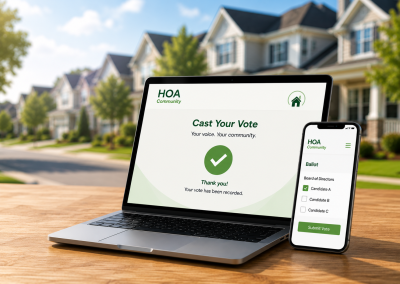

From electronic voting and changing state laws to mobile-first engagement and cybersecurity, these HOA voting trends are influencing how associations run elections and connect with homeowners:
1. Digital and hybrid voting
2. New legal requirements
3. Innovative voting models
4. Mobile-first homeowner experiences
5. Community engagement and participation
6. Data protections
Homeowner’s associations (HOAs) are changing, and fast. In 2026 alone, as many as 4,000 new HOAs will crop up across the country. Over 77 million people already live in HOA-covered communities, and the next generation of homeowners is like nothing your board has seen before.
Nowhere is this more visible than in HOA voting. Paper ballots and manual counts once dominated the process, but today they’re giving way to more flexible, accessible approaches that better reflect homeowners’ real needs. From legal changes to technology, so many trends are reshaping how associations make decisions. Learn what’s evolving for HOA voting and how it will affect your organization.
Growth of Digital and Hybrid Voting
Online voting is the new norm for HOAs, and for good reason. Changes in state laws have made it easier for associations to adopt electronic voting, opening the door to higher participation and smoother elections. After all, when busy homeowners can vote online or combine in-person meetings with secure digital ballots, turnout tends to increase.
Digital voting is easier for both boards and homeowners because it cuts down on manual processes and in-person requirements. Modern platforms like SnapBallot™ also raise the bar for security, locking down e-votes with encryption and audit trails. It’s a smart way to maximize your resources while giving homeowners the peace of mind they crave.
The twist to this trend is that DIY voting is possible for small HOAs. DIY tools like SnapBallot make it possible to launch secure electronic or hybrid elections without technical expertise or large budgets, opening this option up to more HOAs in 2026.
Legal Changes
As always, there will be plenty of changes to HOA laws in 2026. Ultimately, this depends on where you live, but it’s crucial to stay on top of any regulatory changes for compliance.
For example, in Florida, HB 913 made it easier for associations to adopt electronic voting by removing barriers to it. Texas followed a similar path with SB 2629, which expanded flexibility not only for electronic voting but also for proxy and absentee voting. Meanwhile, California’s AB 2460 focused on quorum requirements, helping associations better understand how electronic ballots factor into voting thresholds.
Maryland’s House Bill 1534 takes things a step further by requiring condos and HOAs to run elections through an independent third-party. The bill also requires HOAs to use secure, audit-friendly voting platforms that can verify voter identity, ensure anonymity, and more.
These legal changes were a win for HOAs, but some regulations will require more from your association. For example, more states are imposing stricter opt-in rules for digital voting. Homeowners may be required to explicitly consent to electronic ballots, and that means associations must provide a way to opt out and use traditional methods instead. Because of that, you need a flexible DIY election system that supports both electronic and paper-based options.
But how do you keep on top of regulatory changes in your area? Depending on the size of your HOA, you might have an attorney or management company that alerts you about these new changes. But if you’re on the smaller side, set a quarterly reminder on your calendar to look for pending legislation in your state. Google Alerts are also helpful. Try setting up reminders with keywords like “HOA voting laws [state name]” or “HOA legislation [state name]” to receive timely alerts.
Innovative Voting Models
In 2026, HOAs aren’t just rethinking vote collection; they’re also embracing new ways of voting altogether. Out-of-the-box voting models, like proxy voting, are gaining traction because they offer homeowners options that better reflect their needs.
Embracing a new model does require the right processes and technology, especially if you want to preserve homeowner trust. Platforms like SnapBallot make it easier for HOAs to experiment with online voting methods without a complex setup process, and that’s perfect for volunteer-run boards.

Mobile-First Experiences
Easy voting options online are a great starting point for member engagement. But in 2026, more HOAs are embracing an end-to-end mobile-first experience for their members. The goal is to meet homeowners where they already are: on their phones.
Mobile-friendly platforms remove common friction points that suppress turnout. Homeowners don’t need to download special software or navigate complex portals; they open a secure link and cast their vote in minutes.
Mobile-first is also an information goldmine for HOA boards. Digital platforms can surface participation trends and engagement rates, giving boards a clearer picture of how and when members interact with you. SnapBallot combines mobile-optimized voting with real-time reporting, helping HOAs improve both accessibility and decision-making.
Community Engagement
Email newsletters are great, but homeowners’ inboxes are already full to the brim. In 2026, creative HOAs are embracing new ways of building community – and fostering deeper engagement and trust in the process.
Across the country, associations are working to shed their reputation as top-down or overly restrictive, operating instead in a more neighbor-driven way. HOAs are investing more energy in community-building efforts like neighborhood picnics, holiday events, and family-friendly gatherings that bring residents together outside of formal meetings. These moments create goodwill and make homeowners more inclined to participate when important decisions are up for a vote.
While the move to e-votes is a game-changer for HOAs, digital tools can’t replace face-to-face interaction. If anything, they support it. By making voting easier and less time-consuming, platforms like SnapBallot reduce friction around decision-making and free up boards to focus on engagement instead of administration. The result is a healthier balance: streamlined digital participation paired with stronger, more connected communities.
Data Protections
Data protection has always been important, but in 2026, even small HOAs will have to revamp their cybersecurity. Homeowners are (rightfully) expecting the same standards they see in other digital spaces. This is the year to implement strong encryption, controlled access, clear audit trails, and safeguards that protect ballot integrity and member privacy.
That isn’t new. But what is new is that security is something you have to prove to your members. Boards should provide:
Formal security reviews by third parties
Documented controls
Verification processes for member eligibility and ballots
DIY voting processes are hard for small HOAs to pull off because they lack internal IT experts. That’s why it’s so crucial to embrace a voting platform with data protection baked in. SnapBallot includes secure-by-default protections like encryption and audit-ready logs, helping HOA leaders run secure elections without hiring pricey cyber experts.
Prepare Your HOA for What’s Next
More Americans are joining HOAs this year, and they’re rightfully demanding more from their representatives. Online voting and improved accessibility are just some of the HOA voting trends you can expect to see continue to influence associations. In some cases, these trends are a legal requirement, but more than that, they’re an opportunity to strengthen relationships with homeowners.
Regardless of where you are today, having the right tools makes all the difference. SnapBallot balances ease of use with security, affordability, and compliance, helping even the smallest HOAs run effective DIY elections.