
Digital voting for trade associations removes friction from the democratic process, making elections easier for both members and staff. Trade associations can easily set up digital voting by:
1. Checking legalities and governance requirements first
2. Selecting a DIY voting platform
3. Building the ballot
4. Communicating timelines
5. Educating members
6. Conducting an election
7. Certifying results
Trade associations represent the interests of their members, and voting is a crucial way to make those voices heard. However, traditional paper-based voting just can’t keep up with busy schedules, quorum requirements, and limited staff. How are you supposed to further members’ interests if it takes so much effort to know what they want?
With the right approach and platform, you can redesign voting to increase participation without sacrificing trust. Learn how digital voting works for trade associations, how to make the switch, and common pitfalls to avoid.
How Digital Voting Works for Trade Associations – And Why It’s So Helpful
Digital voting is a more accessible, tech-enabled version of the paper voting you’re already familiar with. There are actually several ways trade associations implement digital voting, including:
Online Portals
With this setup, you send members a secure sign-on link, which opens in their browser. From there, members vote on candidates, bylaws, or resolutions at their convenience. Online portals are mobile-friendly and don’t require members to download software, making this a convenient alternative to paper votes.
Virtual Meetings
Do you hold votes at your annual meeting? Some associations embed digital voting into these meetings, which happen live. You can use either polling or ballot tools during the vote, which generate live results. The downside is that members must attend at a specific time, which can skew results.
Hybrid Models
Not all members want to vote digitally, and that’s okay. A hybrid voting setup allows members to choose between traditional and digital voting. If your organization still relies on paper ballots, Survey & Ballot Systems, the team behind SnapBallot, offers a complete, turnkey paper and hybrid voting solution.
Digital voting for trade associations requires adjusting your current practices. While there will always be a learning curve when you make changes, digital voting improves elections so much that associations find the tradeoff worthwhile. Online DIY elections offer benefits like:
Greater participation (and achieving quorum for less hassle)
A better member experience
Improved governance through clear audit trails and less human error
Lower administrative burden
Easy-to-use tools that don’t require any tech expertise
Ultimately, digital voting makes elections easier for everyone. If you want to build trust and engage members, offer a digital option.
How to Set Up Digital Voting for Your Association
Moving to digital voting doesn’t have to be disruptive or technical. With the right tools, you can set up secure, compliant elections that everyone enjoys participating in. Follow these steps to successfully launch digital voting for your trade association.
Understand Governance Requirements
Before you can set up digital voting, look at your bylaws and legal requirements. Not all states allow digital voting, so make sure it’s legal for your association to offer it. Many states and association bylaws require members to explicitly opt-in to electronic voting. Others specify notice periods, ballot retention rules, or documentation requirements. Before going digital, associations typically need to review (and sometimes update) their bylaws to allow electronic ballots.
This is where purpose-built election platforms can be especially helpful. Modern systems like SnapBallot™ guide administrators through setup, apply consistent rules, and maintain records that support compliance, without requiring legal or technical expertise from staff or volunteers.
You should also review your governance rules on:
Quorum
Voter Eligibility
Nomination Requirements
Voting Language
Deadlines
Required Notice Periods
Digital voting can also affect timelines. Email notices may allow for shorter lead times, while mailed notices often require earlier planning. Because rules vary by state and association, you should hire legal counsel before rolling out digital voting for the first time.
Select a Voting Platform
The next step is choosing a voting platform that supports your election requirements. For trade associations, security and privacy are non-negotiable, especially when votes involve sensitive member decisions.
Look for platforms that offer:
End-to-end encryption
Secure authentication, like email sign-in links
Protected vote storage to prevent unauthorized access
Audit Trails
Anonymous votes
SnapBallot has these safeguards in place, which help associations run transparent elections without compromising confidentiality.
Build the Ballot
Clear instructions and thoughtful formatting go a long way toward improving participation. The easier it is to understand the ballot, the more informed decisions your members can make. SnapBallot’s DIY election platform allows you to include additional information on ballots, including candidate profiles, bios, or supporting information about a particular issue.
Aside from formatting, pay close attention to the content of the ballot itself. Clearly define what members are voting on and use plain language to explain each item. When in doubt, run ballot language through a grade-level checker; aim to write at an eighth-grade level if possible.
Create a Communication Plan and Timeline
At this stage, you have a platform and ballot ready for use. However, you also need an election timeline and plan for communicating these changes to your members. Members should know what is being voted on, when voting opens and closes, and how to cast their ballot well before the election begins. Map out your timeline early, including announcement dates, voting windows, reminder messages, and any required notice periods outlined in your bylaws.
Educate Members
Member education is one of the most effective ways to decrease confusion and run a stress-free election. Offering dry runs or sample ballots helps members understand what to expect, while simple how-to guides, short videos, and screenshots can walk them through the voting process step by step. Pair these resources with multichannel outreach across email, social media, your website, SMS, or member portal to ensure every member knows where to find help if they need it.
Conduct the Election
Once voting is live, monitor participation to spot drop-offs early and respond accordingly. You can use SnapBallot to track turnout in real-time, which makes it easier to see if you’re on pace to meet quorum.
As the close date approaches, timely reminders can make a big difference. Sending follow-ups to members who haven’t yet voted helps boost participation without adding manual work, ensuring more voices are heard in your election.
Validate the Results
After voting closes, formally confirm the results and generate the reports required by your bylaws. SnapBallot generates results in real-time, so you can send election outcomes to members the same day in many cases. Our platform helps you verify and document results according to your bylaws, which helps with both compliance and transparency.
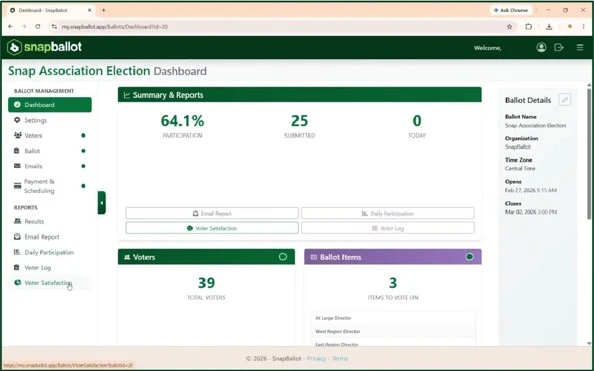

Internally, take time to review how the election went. A brief lessons-learned discussion can surface what worked well and where you can improve next time. Members also have invaluable insight into the election process, so send a short post-election survey to hear their thoughts. Not only will this improve future elections, but it also shows members that you take their feedback seriously.
Avoid Common Pitfalls With Trade Association Voting
Embracing digital elections may come with a few speed bumps. Don’t let these challenges deter you: here’s how to overcome common pitfalls of DIY elections.
Failing to Get Consent
Many bylaws and state laws require members to explicitly consent to electronic delivery and voting. If consent isn’t in place, associations may still need to rely on traditional paper ballots. Always confirm consent requirements before launching a digital election.
Under-communication
Members shouldn’t be confused about when or how to vote. Clear, repeated communication reduces uncertainty and prevents last-minute questions or mistrust. When scheduling your election outreach, err on the side of overcommunicating, since not all members will read every message.
Forgetting About Accessibility
Trade association members have varying levels of technical availability. Instead of using a complex voting platform, offer a simple, streamlined experience. Overcomplicated processes can unintentionally exclude members, so making it as simple as possible will improve both engagement and member satisfaction. SnapBallot is designed for simple, mobile-friendly voting that anyone can set up and use, with no technical knowledge required.
Bring Digital Voting to Your Association
Digital voting is both the present and the future. Your members already expect convenient, mobile-first experiences, and offering e-votes is the perfect way to meet their needs. The proper setup increases participation and reduces administrative strain, all while improving trust and compliance.
The right platform makes all the difference. Whether you have a small trade association or serve thousands of members, SnapBallot’s DIY election tools put the power of democracy at your fingertips.