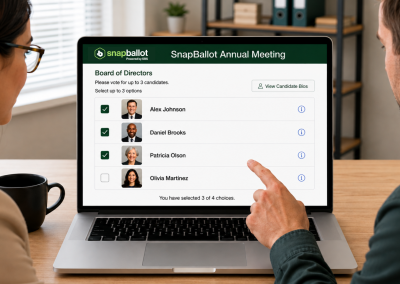

Are your members skeptical about online voting? Ease your HOA into going digital with these baby steps:
Online voting makes HOA elections faster and easier – not to mention far less of a paperwork nightmare. But just because your board offers a digital voting option doesn’t mean homeowners will embrace it. Resistance to online voting is surprisingly common in HOAs, especially when homeowners worry about security and privacy.
Fortunately, you don’t have to keep your elections in the dark ages. The right approach can ease homeowners’ concerns and make your elections better in the process. Learn why homeowners resist online voting, how to ease the transition, and what to look for in a platform to make the process simpler for everyone.
Why Do HOAs Resist Online Voting?
Homeowners don’t resist online voting because they’re “against technology.” More often than not, it comes down to a lack of trust, their tech habits, and the fear of making an already sensitive process harder.
Even though paper voting is slower, homeowners think it’s safer just because it’s familiar. Your homeowners might push back against online voting for many other reasons, including:
Security Concerns
Homeowners might worry about hacking or data mismanagement. Even though online voting is usually more secure than paper voting, perceived security matters almost as much as actual security. That means you need to prove how secure it is.
Technology Discomfort
Not everyone wants to click through emails, log into a portal, or learn a new system. If members assume online voting will involve confusing instructions, forgotten passwords, or a generally annoying experience, they’re more likely to resist it before they even try it.
Fear of Complexity
If online voting sounds like one more technical project to manage, your HOA will resist it. Most people aren’t rejecting the convenience of online voting, but the idea of a setup process that seems like a headache.
Limiting Bylaws or State Laws
In some associations, the obstacle isn’t attitude at all. Governing documents or state regulations may limit electronic voting. That doesn’t always mean online voting is off the table, but it does mean the board has to do its homework first.
While there are some valid concerns here, switching to online HOA voting can address many of the problems that make elections frustrating in the first place. There are so many benefits to making the switch, including:
Increased participation: When homeowners can vote from anywhere, they’re more likely to actually participate.
Better transparency and reporting: A strong digital voting process makes it easier to track, organize, and share results.
Audit readiness and compliance: Online voting platforms create cleaner records and stronger documentation, which makes it easier to verify results if questions come up later.
Ultimately, going digital means spending less time sorting paperwork. Homeowners also get a simpler voting experience and more flexibility. That’s worth making the switch, isn’t it?
7 Tips for Reducing Resistance to Digital Voting in HOAs
If your community is hesitant about digital voting, the goal isn’t to force everyone to use it right away. You need to get homeowner buy-in, and that requires building trust. Follow these tips to help homeowners feel more comfortable with online voting.
1. Start Small
You don’t have to digitize everything overnight. Starting with a smaller use case first gives you a chance to test the process, gather feedback, and work out any issues before using this platform for something bigger, like board elections.
2. Lead With Communication
Don’t just announce that online voting is happening and hope everyone gets on board. People are much more likely to support a change when they understand the reason behind it. Explain why the HOA is making the change, what benefits homeowners can expect, and how the process will work.
Emails, social media posts, and website announcements are a good baseline, but for a change this big, it’s best to schedule Q&A sessions with homeowners. Be sure to offer these online and record them so you can share the recordings with members.
3. Address Security and Privacy Concerns
If homeowners are worried about whether their vote will be secure or private, answer those concerns clearly. Don’t make people dig for reassurance. Explain what protections are in place, how votes are safeguarded, and how the process preserves election integrity. It’s also helpful to explain how unsecured and error-prone paper-based processes are compared to digital options.
4. Encourage Hybrid Voting
You don’t have to stop offering paper-based processes just because you introduce e-votes. In many cases, it makes sense to offer both paper and digital. Your state may even require it.
With hybrid votes, you can ease the concerns of homeowners who aren’t ready to go fully online, while still modernizing your HOA. As you get more proof of concept, the naysayers are more likely to get on board over time.
5. Demo How It Works
A lot of resistance comes from people imagining the process will be harder than it actually is. Showing members a simple demo can help with any concerns about complexity.
Walk them through what the ballot looks like, how to access it, and how to cast their vote. As always, record the demos and make them readily available on your website if your members have any questions.
6. Offer A Lot Of Support
Don’t ask homeowners to figure out the new platform on their own. When you roll out something new, you need to offer support as part of the rollout. That could mean:
- Sending instructions via multiple channels
- Providing residents with a point of contact (and making sure that contact knows how the system works)
- Answering frequently asked questions
7. Enlist Fellow Homeowners to Spread the Word
Sometimes the most persuasive voice isn’t the board’s. It’s a neighbor’s. If a few homeowners are comfortable with digital voting and see its value, ask them to help share that perspective with others. Peer reassurance can go a long way, especially in communities where people trust each other more than they trust official announcements.

What to Look for in an HOA Digital Voting Platform
Going digital will save a lot of hassle for boards and homeowners, but some digital voting platforms are easier to use than others. Look for these features to get the most value out of your switch to online voting.
Leading Security Safeguards
Security is one of the first things homeowners will ask about, so the platform you choose needs to inspire confidence right away. That should include encryption and SOC 2 compliance at a minimum. Platforms like are especially helpful here because they support secure, transparent elections without the technical jargon.
Non-Technical Setup
Few HOAs have an in-house IT team to support an election platform, and you shouldn’t need one. The best digital voting platforms are built for real people, not just techies. We built SnapBallot for everyday users, which allows HOAs of all sizes and abilities to run online elections – no tech degree required.
Real-Time Visibility
One major advantage of digital voting is that boards don’t have to wait until the end of an election to understand what’s happening. Real-time visibility into participation can help you track turnout and monitor election progress. That kind of visibility can also make it easier to send reminders and encourage higher participation before the deadline sneaks up on everyone.
Make Voting Easier for Everyone
While it’s common for some homeowners to resist online voting, their anxiety doesn’t have to stall progress. Most concerns come down to homeowner trust and comfort with change. The tips in this guide will ease your HOA's transition to online voting without the growing pains. Still, you need a user-friendly election platform to take your elections online, and that’s where SnapBallot comes in.