
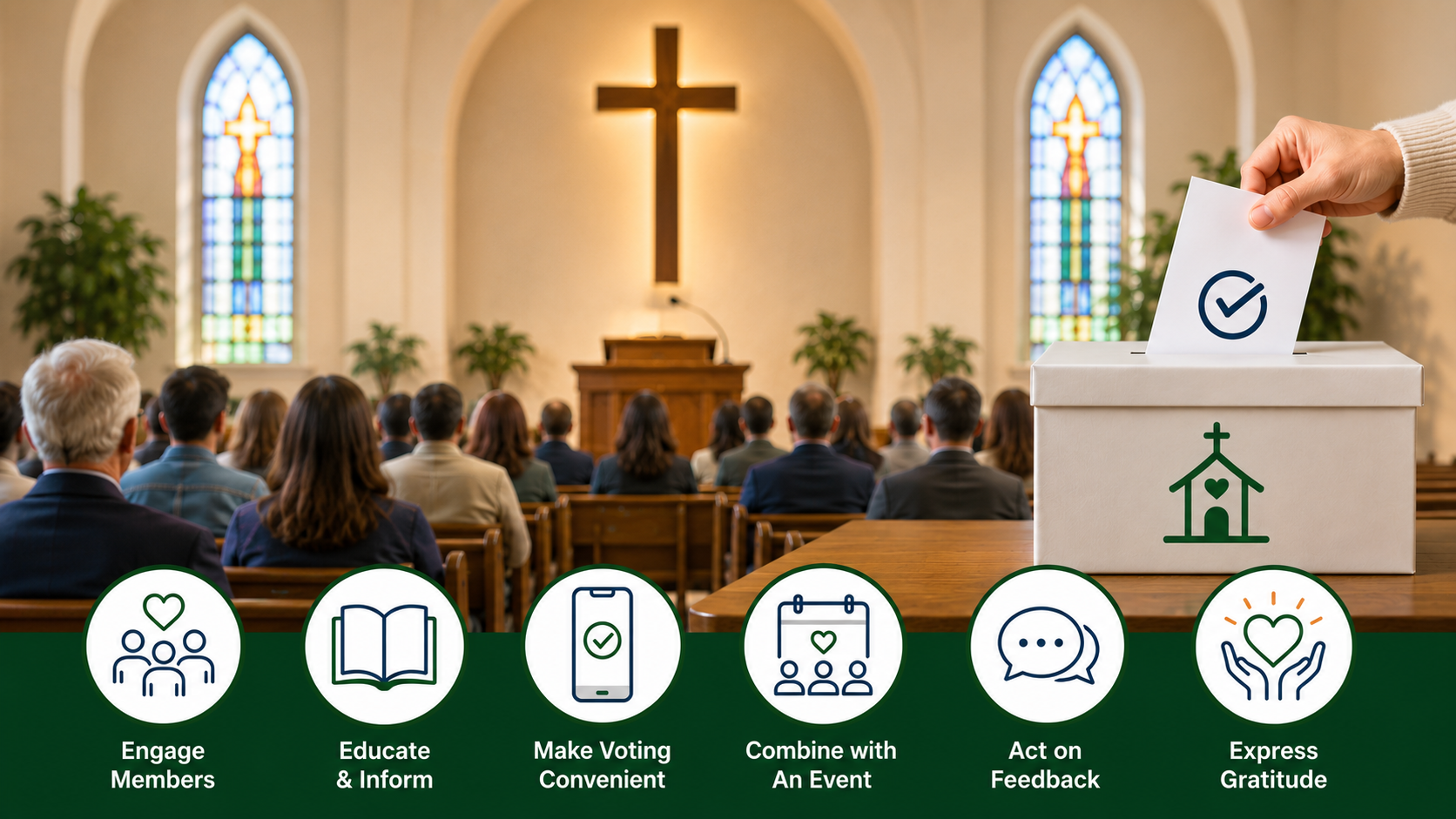
Church-goers may not be as excited about elections as they are about worship services, but they’re just as important. Maybe not in a spiritual sense, but elections support your ministry’s future, determining everything from board members to finances and charity work.
Elections shape how your congregation allocates assets and cares for the community. Despite that, many religious organizations struggle with low turnout. You can’t plan a church’s future without input from members, so how can you persuade more people to cast votes?
Addressing the engagement puzzle requires a lot more than desperate election-season emails. In this guide, you’ll learn why engagement tends to be low in church elections, plus six actionable ways to get more members involved before your next election.
The Biggest Challenges With Member Turnout for Churches
Low participation in church elections rarely comes down to just apathy. It’s usually the result of recurring friction points that quietly signal to members that voting isn’t worth their time.
Understand these common challenges to plan elections that members actually want to participate in:
Elections as administration:
Many members view church elections as an annoying to-do rather than expressions of stewardship. When your organization frames voting as “church business,” it can feel disconnected from worship. As a result, members may not see voting as part of their spiritual responsibility to the community.
Communication gaps:
Even highly engaged congregants will hesitate to participate if they don’t understand what’s at stake. When your church scatters important information across emails and verbal reminders, people are far more likely to miss the information they need to vote.
Inconvenient voting options:
Churches often underestimate how much timing and clarity affect turnout. A single announcement or a last-minute reminder with a vague call to action like “Don’t forget to vote!” usually isn’t enough. If you fail to tell members how to vote, or if participation requires being in a specific place at a particular time, even engaged members may opt out.
Lack of trust:
In some congregations, skepticism and a lack of trust are the reasons for low turnout. Members may feel that “the same few people always decide,” leading them to question whether their vote will make a difference.
These challenges aren’t impossible to overcome, but they do require an intentional plan. Addressing low turnout starts with recognizing that church elections shape a sense of shared belonging in your faith community.

6 Tips To Boost Member Turnout in Religious Organizations
Don’t let church elections become a last-minute dash to achieve quorum. Follow these tips to transform voting into a meaningful extension of worship that invites more members to engage.
1. Frame Voting as Stewardship
Giving and praying are important aspects of church life. Still, members might not equate their more spiritual tasks with something as mundane as a board election. But voting truly is a part of stewardship, and its leaders’ responsibility to frame it that way.
Pastors and lay leaders can model this shift by changing how they communicate about elections. Instead of “We need to vote on the board,” try language like, “This is one of the ways we listen for God’s direction together,” or “Your voice helps shape how we care for the community.”
Plain-language explanations of what elected roles actually do – overseeing finances, supporting pastoral leadership, guiding long-term planning – also help members understand why their participation matters. To reinforce that connection, include a brief “Why this election matters” summary with each ballot. When members can see the real-world impact of a vote, it no longer feels optional.
2. Invest in Education
Before voting opens, churches should consistently communicate the basics: who is eligible to vote, how candidates are nominated, and exactly how and when ballots will be cast and counted. When members understand the process, they’re far more likely to participate without second-guessing whether they qualify to vote.
A simple election FAQ can go a long way. Publish it on your website or share it in pre-election emails, offering bullet-point answers to common questions. This approach reduces confusion and gives members a single source of truth for all things related to elections.
3. Remove Barriers to Participation
Inconvenient voting options will scare even the most engaged church members away from voting. Offering multiple, secure voting methods helps meet people where they are, whether that’s in the sanctuary or at home.
This is where a centralized, purpose-built election platform can make a meaningful difference. Using a secure system like SnapBallot™ allows churches to track participation and maintain voter privacy, all within one audited environment. Security is also baked into the platform. Role-based access and detailed audit logs help ensure the process is fair and verifiable, which can be especially reassuring for members who may be skeptical of online voting.
4. Make Voting an Event
Elections get much more attention when you add them to events that the congregation already looks forward to. Instead of treating elections as a standalone administrative task, pair voting with existing gatherings like:
The annual Christmas pageant
A summer family picnic
A well-attended worship service
Members are already attending and engaged, and this approach makes participation a natural extension of community life.
Digital voting makes this especially easy. Encourage members to cast their ballots right from their phones by prominently highlighting mobile voting in your programs and slides. To add a light, celebratory touch, some churches even offer small incentives, such as giveaways, to members who show their confirmation email after voting.
5. Gather and Act on Member Feedback
The easiest way to improve election turnout is to give church members a seat at the table. Instead of guessing why they aren’t participating, ask them why – the answers may surprise you. A short post-election survey can uncover what felt clear or confusing, and highlight where you could improve for next time.
6. Express Gratitude
Never underestimate the power of a sincere thank-you. Not only does this close the loop after an election, but it also gives you another opportunity to deepen relationships within your congregation. Simple gestures, such as a mention in this week’s sermon or a follow-up email, can help normalize participation in church life.
Gratitude also builds momentum for future elections. When members feel appreciated for showing up, they’re more likely to vote again. Framing thanks around collective care for your mission reinforces the message that every vote contributes to something larger than the election itself.
A Shared Responsibility, A Shared Future
It can feel like church elections are all about chasing numbers. While you definitely need to meet quorum, church elections are a type of stewardship. Cultivating trust and a sense of shared responsibility with members will give them a deeper motivation to participate, both now and in future elections.
With thoughtful planning and the right tools, your religious organizations can run elections that align with your values. SnapBallot simplifies the logistics and helps reinforce trust, one ballot at a time.


